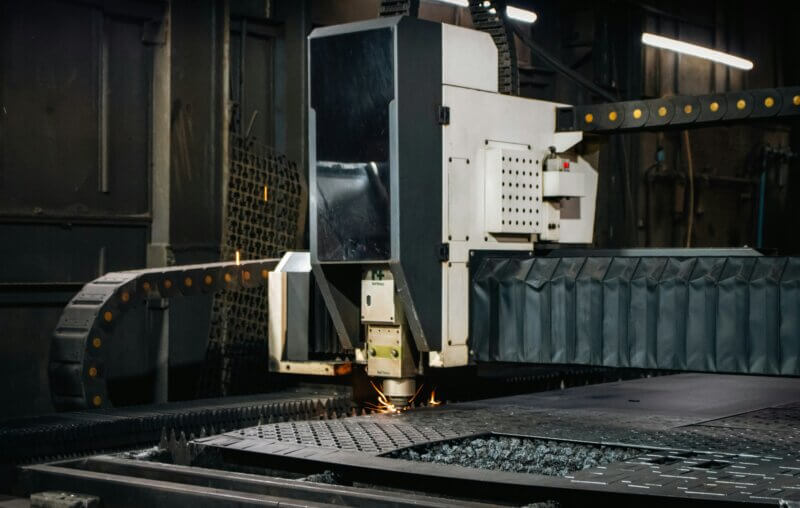
A CNC operator inserts the wrong tool. The machine mills with incorrect parameters. The workpiece is scrap, worst case the tool is damaged. Such errors cost money and time – and they can be avoided with RFID.
-

Recognize Tools
Tool and consumable identified, parameters and offsets loaded automatically. -

Track Tool Life
Usage data written back to the tag after every use. -

Reject Counterfeits
Only spare parts with an authenticated tag are accepted.
Tool Mix-ups and Counterfeit Spare Parts
Industrial machines work with tools and consumables: milling heads, grinding wheels, filters, ink cartridges, welding wire. Each part has specific parameters, each part wears differently. The machine needs to know what’s currently installed.
Traditionally, manufacturers solve this through magazine positions, barcodes, or manual entry. It works – as long as the operator pays attention. But people make mistakes, especially under time pressure. And none of these methods help against counterfeit spare parts.
Automatic Tool Identification
An RFID tag on the tool or consumable stores all relevant data. The machine reads automatically: What is it? What parameters apply? How long has it been used? After use, the machine writes the updated usage data back.
For a CNC milling machine, this means: The tool is recognized, offsets are loaded automatically, tool life is tracked. For a 3D printer: The filament is identified, print temperature adjusts automatically, remaining quantity is updated.
For spare parts, this works as counterfeit protection: The machine only accepts parts with an authenticated tag. Cheap copies that may not have the same quality are detected and rejected.
Quality and Differentiation
Quality is the first reason. Wrong parameters lead to scrap, worn tools to poor surfaces. When the machine always knows what’s installed and how long it’s been running, such errors become rare.
Differentiation is the second reason. RFID tool recognition is a premium feature. It makes the machine easier to operate and justifies a higher price.
RFID Close to Metal
Industrial machines mean metal environments, oil, chips, vibrations. Not the environment where RFID typically shines. But it works – with the right components and the right design.
HF technology at 13.56 MHz works even in close proximity to metal, as long as the antenna is positioned correctly. The read range is short – a few centimeters – but that’s enough for tool holders and cartridges.
RFID Modules for Industrial Machines
View All RFID OEM Modules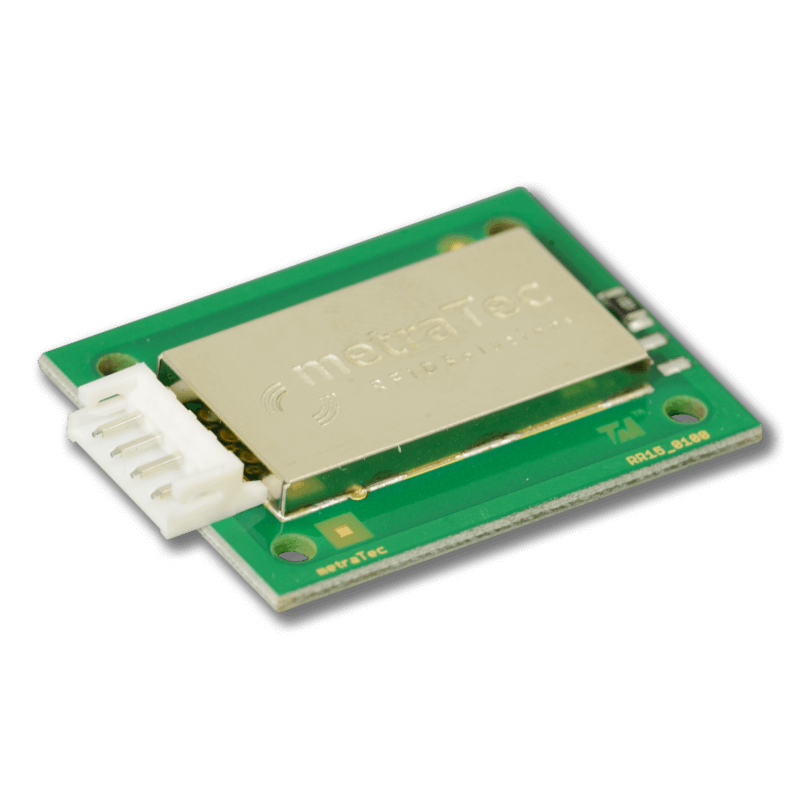

Building Industrial Machines?
Talk to our engineering team about RFID tool recognition.