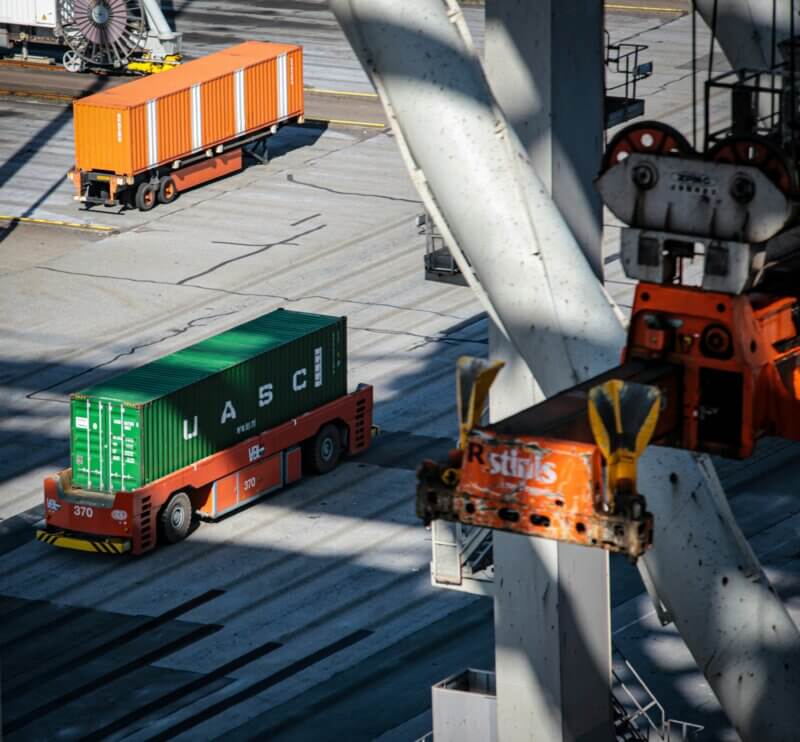
An AGV that loses its way blocks production. A robot that grabs the wrong pallet causes warehouse chaos. That’s why manufacturers of automated guided vehicles and mobile robots use RFID to complement camera and lidar.
-

Floor Navigation
Passive floor tags give absolute position references. No drift. -

Identify Load Carriers
The robot reads the pallet tag and knows what it carries and where it goes. -

Read at Speed
Reliable reads at one meter per second travel speed.
Why Odometry Drifts
Autonomous vehicles typically navigate using laser scanners and cameras. This works well – until the environment changes. A new shelf, a parked forklift, changing light conditions: Suddenly the map is outdated and the vehicle is uncertain.
Pure odometry – counting wheel rotations – drifts over time. After a hundred meters, that can mean several centimeters of deviation. Not enough for precise docking at a loading station.
Floor Tags as Absolute Position References
RFID tags in the floor provide absolute position references. The vehicle drives over a tag, reads its unique ID, and knows exactly where it is. No drift, no dependence on lighting conditions, no confusion with similar-looking locations.
The tags are passive transponders – small plastic discs that are glued or embedded in the floor. They need no power, no maintenance, and last for years. Infrastructure costs are minimal compared to complex sensor setups.
For load carrier recognition, RFID works the same way: The robot reads the tag on the pallet and immediately knows what it’s carrying and where it goes. No confusion, no wrong delivery.
Reliability and Simple Route Setup
Reliability is the main argument. An AGV that gets stuck once a week costs more than the saved labor costs. RFID floor markers give the vehicle certainty – even when the camera is briefly blinded or the laser scanner sees a reflection.
The second reason is simplicity. Setting up new routes means: stick tags and register them in the software. The customer can do this themselves, without expensive commissioning by the manufacturer.
HF for Floor Tags, UHF for Load Carriers
For floor navigation, we use HF technology. The range of a few centimeters is actually an advantage here: The vehicle reads only the tag directly beneath it, not the one three meters away.
For load carrier recognition at greater distances, UHF is used. This lets the robot read the pallet tag from half a meter away as it approaches.
The modules are designed for speed. At one meter per second travel speed, there’s little time for reading – our readers handle it.
RFID Modules for Automated Guided Vehicles
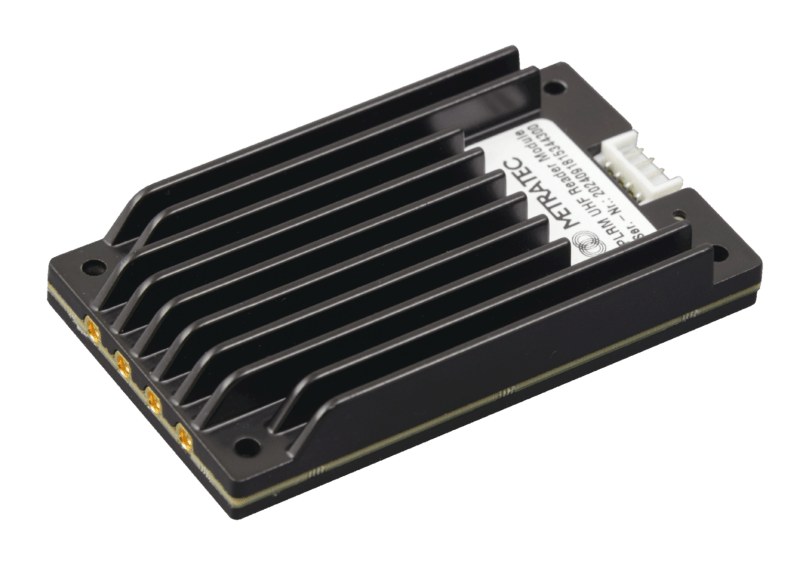 PLRM Long Range UHF RFID Reader/Writer OEM Module
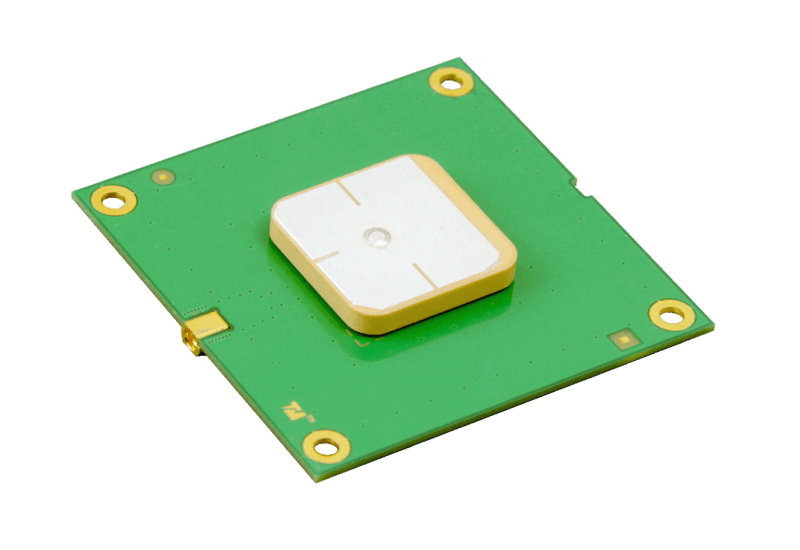 Echo-4 Embedded RFID Antenna
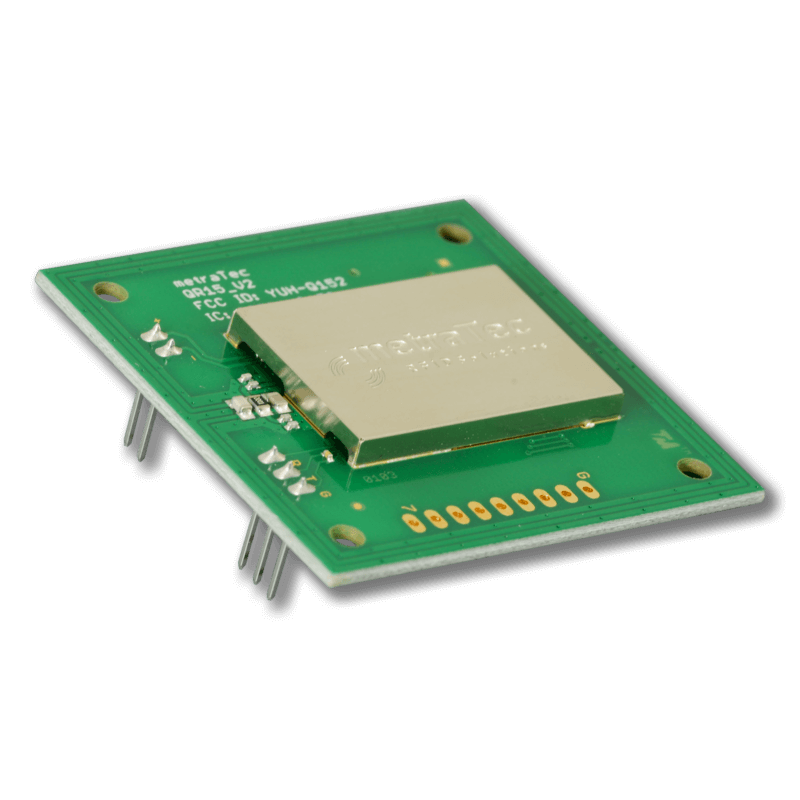 QR15 HF RFID Plugin Module
Developing AGVs, AMRs or Conveyor Systems?
We’ll advise you on RFID integration into your platform.